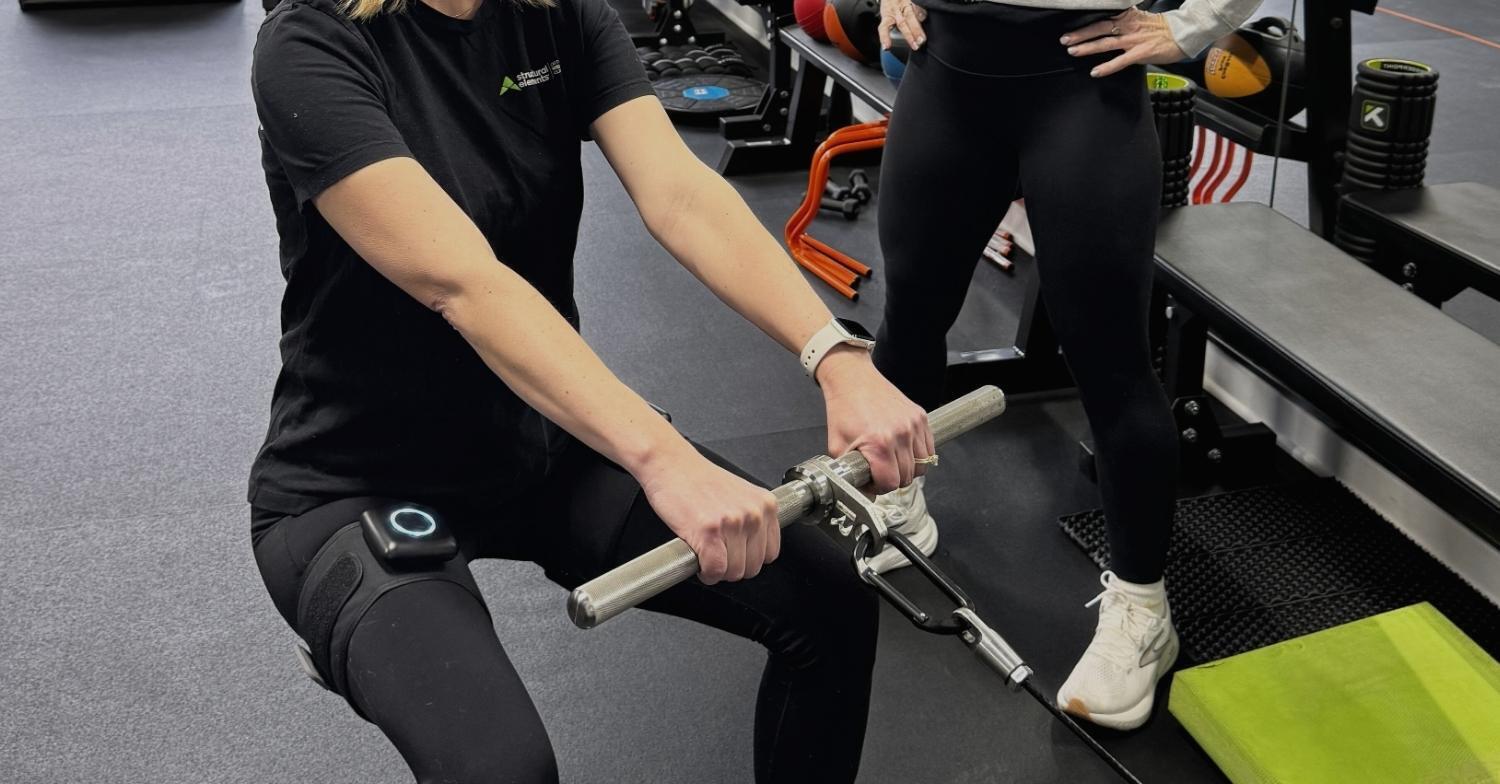
At Structural Elements®, we’re always looking for methods that help the body adapt efficiently without unnecessary wear and tear. Blood Flow Restriction (BFR) therapy or training is one of those rare innovations that’s both physiologically elegant and highly effective. It allows people to gain strength, stimulate muscle growth, and improve recovery using far lighter load — a major advantage for athletes, aging adults, and anyone looking to increase strength.
Used correctly, BFR is one of the most powerful tools in modern orthopedic wellness. Here's why it earns a place inside our human performance ecosystem.
What Is Blood Flow Restriction (BFR)?
BFR uses specialized cuffs or bands to partially restrict venous return while allowing arterial blood to enter the working muscle. This creates metabolic stress, cellular swelling, and fast-twitch fiber recruitment — the same internal environment triggered by heavy lifting.
The difference? You can achieve it with 20–30% of your normal load.
This makes BFR both accessible and highly scalable across fitness levels and clinical needs.
The Core Benefits of BFR
1. Builds Strength With Light Loads
Traditional strength training requires heavy resistance to stimulate fast-twitch muscle fibers. BFR bypasses that rule.By trapping blood in the working muscle, the body fatigues rapidly, triggering high-threshold motor units — even with minimal external load. That means:
- Less stress on joints
- Less compressive force on the spine
- More strength is gained per minute of work
2. Accelerates Muscle Growth
BFR amplifies metabolic demand, increases lactate accumulation, and heightens cell swelling — all strong signals for muscle protein synthesis. Research shows hypertrophy gains comparable to heavy lifting.
For individuals coming off injury or surgery, BFR provides a way to regain muscle size before heavy resistance is safe.
3. Enhances Recovery & Tissue Healing
Restricted venous return and increased metabolic stress stimulate:
- Growth hormone release
- IGF-1 upregulation
- Satellite cell activation
This internal chemistry is strongly associated with tissue repair. BFR leverages the body’s own anabolic signaling to reinforce healing and recovery.
4. Protects Joints and Connective Tissue
With BFR, we can avoid the mechanical strain of heavy loading while still gaining strength. That’s especially valuable for:
- Individuals with arthritis or chronic pain
- Athletes in-season
- Adults over 50 managing tendon or joint issues
We let the metabolic load do the work, not the mechanical load.
5. Improves Endurance and Vascular Health
Low-load BFR in aerobic training has been shown to:
- Improve VO₂ efficiency
- Increase capillary density
- Enhance muscular endurance
The circulatory challenge creates adaptations that improve how efficiently tissue uses oxygen — a goldmine for performance and longevity.
Why We Use BFR Inside Structural Elements®
BFR fits seamlessly into our fascia-focused, human-performance model because it speaks directly to the physiology we care about:
- Circulation
- Neuromuscular recruitment
- Tissue remodeling
- Metabolic conditioning
It also gives our providers a way to progress patients intelligently, bridging the gap between passive care and active loading — without risking reinjury.
We often integrate BFR:
- After manual therapy to reinforce improved mechanics
- During return-to-sport phases
- For tendon and muscle rehabilitation
- To maintain strength during pain-limited periods
- As part of performance training in the (se)® LAB
BFR isn’t a “biohack.” It’s a scientifically sound progression tool that respects joint health while maximizing adaptation.
How BFR Works Alongside Our Other Modalities
Structural Elements® is built on synergy — each modality enhances the others. BFR integrates powerfully with our recovery suite:
- Cryotherapy
Reduces inflammation and soreness, allowing quicker turnaround between BFR sessions.• Infrared SaunaEnhances blood flow after a metabolically demanding BFR session, amplifying nutrient delivery.• Red Light TherapySupports mitochondrial repair and muscle recovery triggered during BFR.
- PEMF
Reinforces cellular signaling pathways activated during tissue repair.
- Compression Boots
Flushes metabolites and reduces swelling after BFR-driven metabolic accumulation.• Whole Body VibrationImproves neuromuscular activation and circulation — the perfect warm-up or finisher.BFR becomes even more potent when layered inside a thoughtful recovery strategy.
- Whole Body Vibration
Improves neuromuscular activation and circulation — the perfect warm-up or finisher.BFR becomes even more potent when layered inside a thoughtful recovery strategy.
Who Benefits Most?
While BFR can be valuable for almost anyone, it shines brightest for:
- Athletes in-season looking to maintain strength without fatigue
- Adults seeking muscle growth without joint stress
- Older adults preserving muscle mass and function
- Endurance athletes improving muscular efficiency
When we combine BFR with our manual therapy, movement retraining, and recovery modalities, patients progress faster and more safely.
A Smart Approach to Strength
At Structural Elements®, we believe in working with the body's design — not against it. Blood Flow Restriction allows us to create high-level adaptation with minimal mechanical stress. It’s efficient, safe when supervised, and deeply aligned with our mission to unlock human performance.
If you’re curious about integrating BFR into your recovery or performance program, our team can guide you through customized sessions that align with your goals, structure, and physiology.
%20(1).jpg)